Persepolis
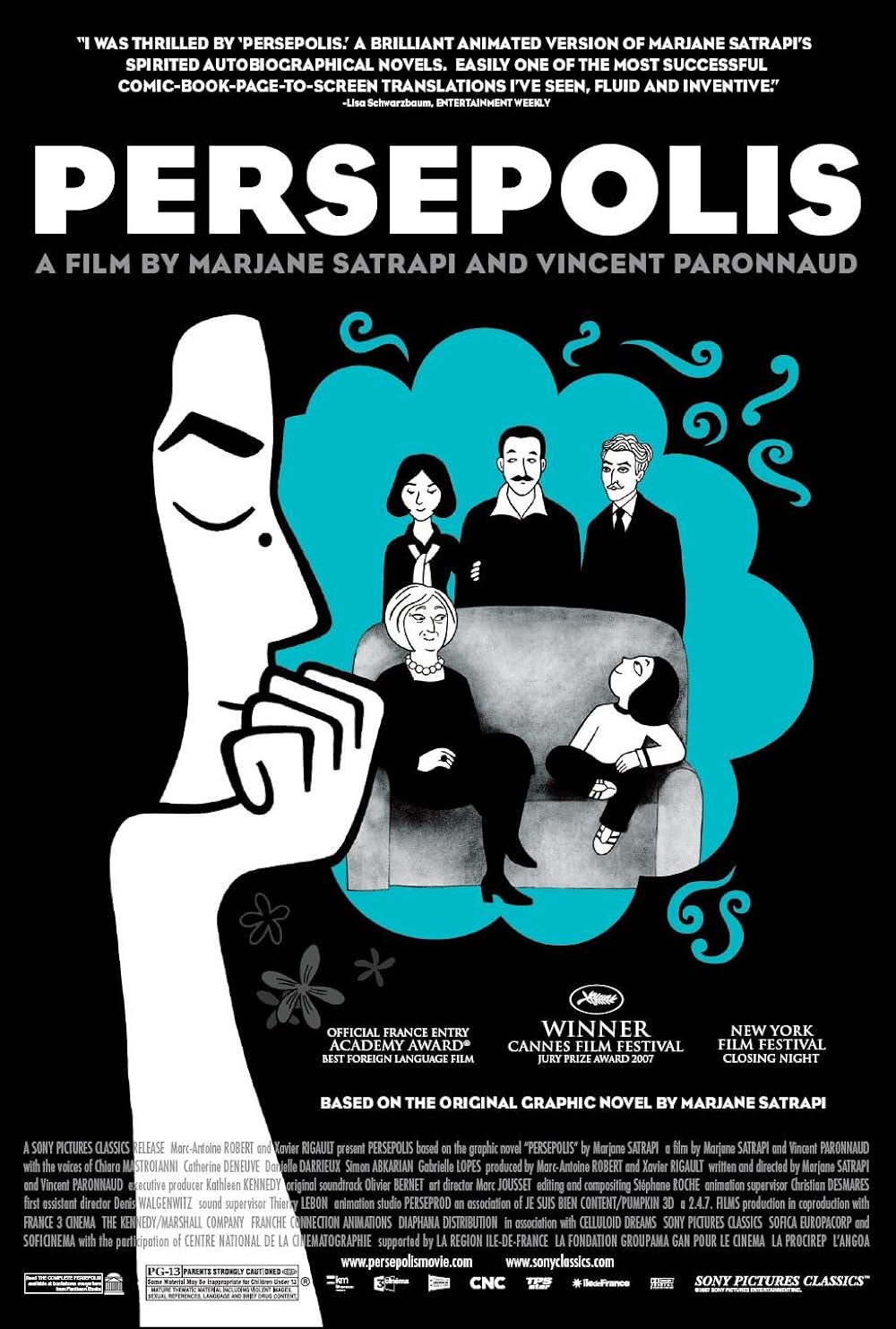
Marjane Satrapi has died. Persepolis, the film she directed (with Vincent Paronnaud) which is based on her graphic novel memoir of the same name, is one of cinema’s finest gems. It’s one of the lesser-known films I feature in Come & See: A Christian Guide to the Greatest Films of All Time, and it’s one I especially hoped readers would be persuaded to watch once they were aware of it. I’m sharing the devotion here in hopes of the same upon learning of Satrapi’s death.
With Pixar’s success, the major animation studios moved away from traditional, hand-drawn animation and toward computer generated animation instead. Japan’s Studio Ghibli never ceased doing hand-drawn animation. Independent animators, such as Ireland’s Tomm Moore and France’s Sylvain Chomet, have kept traditional animation alive in the West. The most remarkable of these more mature, traditionally animated films is Marjane Satrapi’s Persepolis (2007), which is based on her autobiographical graphic novel of the same name.
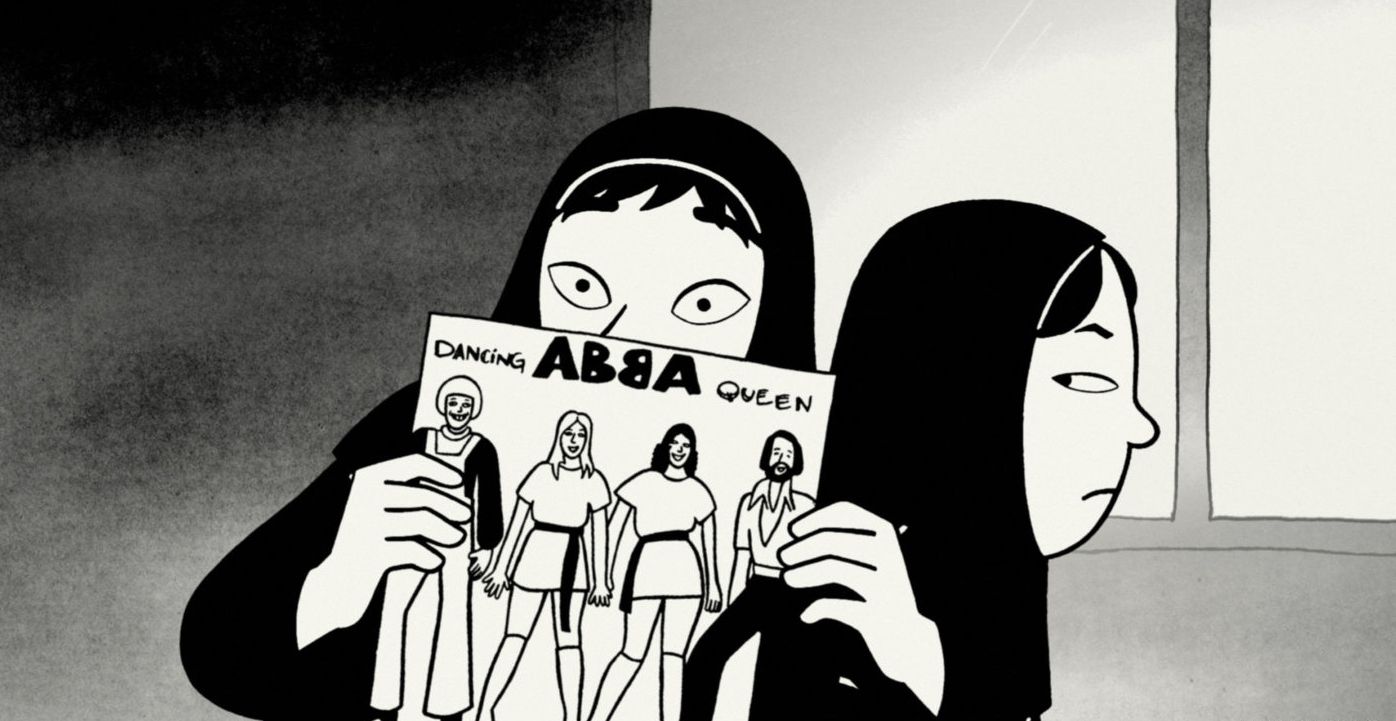
Persepolis chronicles Satrapi’s coming-of-age in pre-revolution and post-revolution war-torn Iran. Satrapi’s family are quiet dissidents struggling to stay free and alive under the oppressive, fundamentalist regime. Marjane finds subtle ways to rebel, such as rocking out to punk music in the privacy of her bedroom or steeping herself in Communist literature when she goes to Austria to study. In addition to being a story of sheer survival, Persepolis is about Marjane’s awakening to new ideas in every realm of thought, including gender politics, art and commerce, theology, and national identity in an increasingly globalized world.
Like the shadow plays that prefigured film animation, Persepolis makes use of simple black and white images to communicate. Expressive and visually engaging, the style also works to make Marjane’s specific story universal. The style strips away cultural signifiers, and we are able to imagine this story happening in other contexts, even our own. Like Marjane, we all have to reconcile ourselves to our families, ourselves, and our society as we grow up. We all navigate issues of identity, sexuality, and calling. What’s to stop the tumult around her from happening “here,” wherever “here” may be for each viewer?
Rather than creating a complete world we can marvel at but into which we cannot enter—as in strikingly realistic computer generated animation—suggestive animation creates an evocative, open world that invites us in so that we can fill its void with our own experience and imagination. Both the storyteller and the audience is more free to express and respond emotionally to the narrative. That’s the particular gift of more representational imagery like that in Persepolis – it relies on the viewer to create a more fully-realized world.
God, the kind of fundamentalism that seeks to stifle and control is a plague. Rid us of it. Compel us with your message of open mercy and free grace. Heal of us fear that prompts us to use violence to institute false peace in our societies, and heal of us the fear that prompts us to capitulate to those who ply that violence. Bolster the spirits of those people living under repressive regimes, and convict those of us who are profiting off their distress. Work justice in the world, God, especially when we fail to do so ourselves.