
Melting Gold
A bright light appeared in the lower left corner of the clerestory window on the wall opposite our bed. Saturn. I knew it by its golden light. In memory I watched its moons transversing its surface, sunlight glistening off its crystalline rings. From my bed I could only see it shining. Silent. Stolid. Sublime. Steadily progressing westward as my inclined body rode the curvature of the earth to the east.
It’s a facade, the lie of distance. 750 million miles away, we see only what Saturn’s surface shows us. Clouds of gaseous yellow ammonia, which give the pinprick of light in my widow that distinct golden glow, surround hydrogen and helium gas with trace amounts of other elements. Melting toward its rocky, metallic core, helium condenses into droplets and tears through the hydrogen, generating more heat to eject into space than it collects from the distant Sun.
At the bottom of the cloud, the hydrogen condenses into a vast ocean of liquid metal. A sailor on Saturn’s seas would sweep up diamonds from the deck of his ship – the carbon in the atmosphere crystalizes in the helium rain heat and screams out of the amber skies. Saturn has 293 known moons tugging up its molten waves, not just the few I have spied in telescopes. Saturn’s magnetic field lightnings through its hydrogen cloud with five hundred times more volatile juice than Earth’s convex, maternal magnetic cocoon. The discipline of the Sun keeps Saturn in orbit, as with all planets, but the Sun works ninety-five times as hard to keep Saturn in line as it does Earth. Saturn appears silent, but Saturn is a science-fiction storm.
I lay in my bed and watch this potent, alien system cross the cosmos. I am Saturn, I think.
It rained again, another California rain. Soaky. Live in a few different places and you learn there are different kinds of rain. Rain in North Texas like thick curtains pulled to sweep across the land so that you can sit at one stoplight and watch it approach you from the stoplight down the road. Cold, stingy rain trying to become ice sneezed by a north wind cutting across the central plains. Rocky Mountain showers cast over the peaks and valleys by an invisible god holding a watering can standing on a fourteen-thousand foot summit. Sudden desert rains broke open out of an egg in the sky. California rains remember the tropics where they were born. Ocean, cloud, and air become as close to one substance as can be. You use your arms to push through it. Umbrellas don’t really help – California rain is under things as well as on top of them.
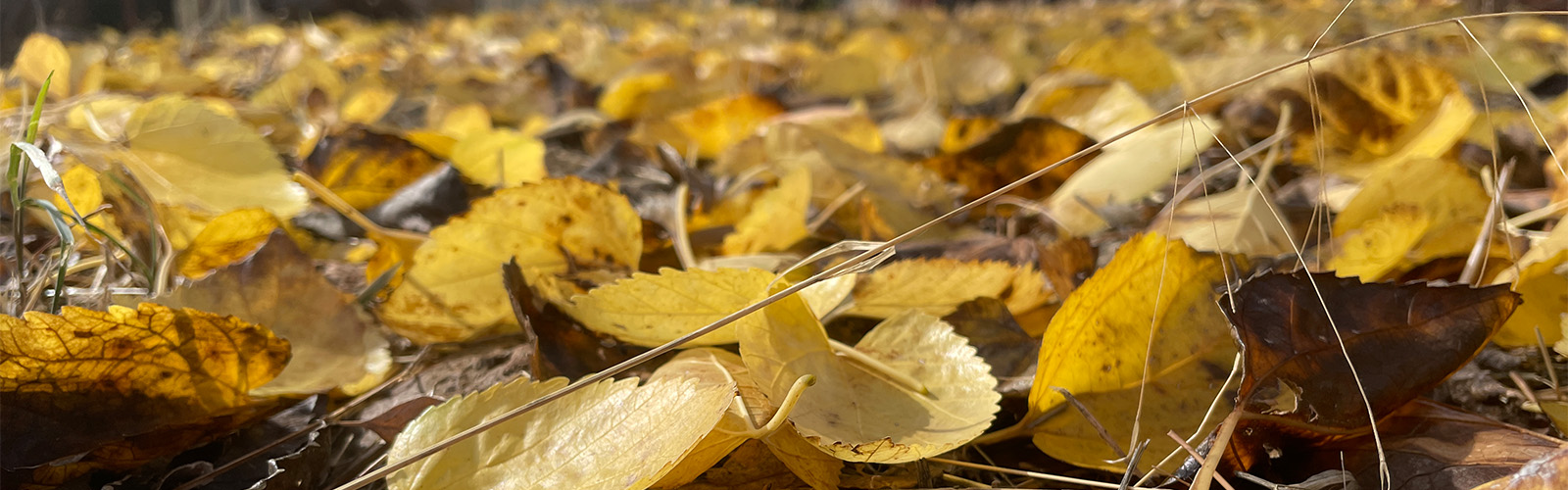
I went downstairs in the morning after the rain to goad the kids to get ready for the day and saw a carpet of gold on the ground outside their windows. The rain loosed the now-flaxen leaves from our white mulberry tree. I couldn’t help myself – I walked out the sliding door despite the wet and waded through the aureate waves. This is better than diamonds, if you ask me. Diamonds are forever. The sunken surface of Saturn’s core is thick with ‘em. These leaves fall, return to the earth, sublimate, are taken back in by the tree roots, and emerge again green.
No, I am of the Earth, I think, made of this clay, full of these waters. When the rains come and flood my being, like they did last night, will I fall, dissipate, and return renewed?
When the rains come, the birds leave. I know they don’t go far. They hunker down somewhere. I’ll probably never know exactly where even if I spent every storm searching the brush piles and the blackberry thickets for their coveys. They hide. Do they feel fear? Or do they assume a kind of accustomed stoicism in order to weather the weather? I regret the storm for what it does to the birds.
The big ones return first, the Turkey Vultures, Crows, owls, and Red-Tail Hawks. Sometimes they don’t even hide. They perch up close to the clouds, eye the rain suspiciously, and reject it.
Then the littles come, the Oak Titmouse (solitary), the White-Crowned Sparrows, the Juncos, the Spotted Towhees, and Acorn Woodpeckers. The Hermit Thrush stays hidden like always, but he resumes his dusk song. They all return first because they keep to the arboreal shelters, the tree limbs and bushes. They canvas the wet ground, hopping along looking for seeds the rain set free. Furtive, for sure, but too hungry to stay hidden. Their restlessness is the first sign the rains are ending.
I sit at the living room window and watch for the Northern Flickers. They are medium-sized birds. We have a small flock of a half dozen who steward our meadow for bugs. I know they’ll return only when the rain is done and the beetles and earthworms push out of the mud for a breath of fresh air. Crouched in the grass, pulling at invertebrates, Northern Flickers are difficult to see. Their mottled wing backs are a perfect match for the brown and gold of the Sierra forest floor – gotta hide from those rain-be-damned raptors. But when the Northern Flickers rouse you get a glimpse of bright orange under their wings, a flash of sky-white on their bellies, and a peak at the black bib beneath their curiously curved bills. They hide, but when they rise, they dazzle.
I often marvel at the size discrepancies between species of birds. Sure, mammals vary widely in size too. Between the shrew to the blue whale is a greater size gap than exists between Earth and Saturn, relatively speaking, but I can’t imagine a shrew looks at a blue whale and thinks, Yeah, that’s me if I dropped my diet. Birds are all alike in shape. Maybe the Anna’s Hummingbird that buzzes my head as I step out on the porch thinks if you gave her enough nectar she’d grow to the same size as the Turkey Vulture in the digger pine across the driveway. They are basically the same shape after all. And the shrew doesn’t swim with the whales but the Oak Titmouse competes with the Crow for fallen seeds, little feathered people among feathered giants.
I rage at the rain in the treetops and then my soul cowers in the bracken. I await the return of the Flickers to the grass.
A couple of weeks ago, distraught by the suggestion that the medicine I take to help manage symptoms of depression might preclude me from other, necessary medical care, and not knowing when I’d be able to finish the dental work recently arrested, I chose to try to do without medication for a time, so I could tell a dentist I’m not taking anything he might deem suspect. It turned out to be a particularly stressful time, a storm of sorts, and I erupted in a cascade of anger that rolled over our household. I shouted deceits I had been stoking in the depths of my selfish heart. My beloved caught the coals, bore their stinging burn, and tossed them back to me, rejecting them as the lies they were. I wallowed in the filth of self pity as I watched Saturn glide through space. Quelled, I kicked at the fallen leaves. Reconciled with my wife a day later, I considered the birds.
Medicine takes the edge off. The coping strategies I developed with my therapist – such as maintaining healthy routines, exercising, playing music in the house during the witching hours of 4 and 6 PM, allowing myself to get out of the house in the evenings at least once a week, getting enough sleep, and, most importantly, communicating with my spouse – these strategies help a ton. The liquid metal seas of my soul run smoother. But sometimes there are storms. I’ve learned to recognize the conditions that precipitate them—that’s a coping strategy too—and a small dose of medication helps me make it through. I am resistant to taking pharmaceuticals but I can’t deny they help. When it gets really bad, they make all the difference.
And the glory of a healthy relationship with a spouse is the Still Together on the other side of a storm. Reconciliation and renewed communication are the leaves of gold that carpet the ground behind us as we look back on our life together. There’s no denying the Autumn storms but the melting gold promises the green of an eternally recurring Spring.
A couple of weeks later, I recognized another coming storm, precipitated by similar circumstances, and this time I welcomed the help of a little medication. Along with the coping strategies I mentioned above, it made all the difference. Saturn sailed across the windowpane again in silence.
Oh, my heart is a vulture, perched on a dead branch, head washed in piss, eager for a mouthful of decay. Oh, my soul is a thrush, scared to be seen, singing a soft song, looking for love. Oh, how I long to be a Flicker, adapted to the realities of my life but still brave and bright, auburn in the sun breaking through the emptied clouds.