
Rough Seas
This piece on The Odyssey includes spoilers for Christopher Nolan’s recent film. It’s about changes he makes to Homer’s tale, why I think he does it, and what the effects are. There is also a cute story about my kids at the end of this piece.
When I heard that Christopher Nolan was making an adaptation of The Odyssey, my biggest question concerned how he would handle the gods.
Christopher Nolan is not a mystical filmmaker. He’s a Materialist. For him, nothing exists except matter and its movements. Given the genres he works in, Nolan’s Materialism is the most interesting thing to me about his work. The effort he puts into making his speculative fiction “work” in narrative worlds absent “magic” is incredible. Most storytellers are satisfied with “he can do that because he’s Batman.” Nolan spends considerable screen time explaining how actual military-grade technology makes it possible for Batman to fly. Even love itself is a gravity-like force in Nolan’s films.
And The Odyssey is a mystical story. It’s about men and women interacting with gods. It’s about what the gods ask of a person. It’s basically epic Job. Like Job, the story is set in what would have been the distant past for the original audience, it existed for many hundreds of years before the first written manuscripts we know about, and it was first written down around the same time in history as Job. In their most basic terms, the stories are the same too: “This is a good guy, maybe the best guy. Bad things happen because the gods allow it. What’s a (good) guy to do?”
Belief in god(s) is never a question in the stories. Fealty is. It’s not even accurate to say that there is a supernatural dimension in the stories. Odysseus and Job live in worlds where there is no border between the natural and the supernatural realms. There absolutely are gods. They might screw with you. Will you continue to honor them even if there is no advantage to you to do so?
Telling Tales
Materialist Nolan handles the supernatural in The Odyssey by making the Greeks superstitious. We experience their world as they experience it: they believe in the gods even if they don’t see them. The movie shows us supernatural things but does not believe in them. Yes, there is a cyclops and giant warriors and a beast in the rocks above the whirlpool and men are turned into pigs and Odysseus has a chat with the dead. Importantly, this is the story drug-addled Odysseus tells Calypso while lounging on a beach rocking out to Taylor Swift’s “Anti-Hero.” By framing the events this way, the movie suggests that these supernatural events might not be factual. They might be merely Odysseus’ justification for why he has not and still won’t go home. He’s just a dude having an affair talking to his paramour about why it’s better this way for everyone.
This is Nolan’s most common kind of protagonist – one who can’t (or won’t) tell the difference between truth and fiction. His movies are stories about how stories help us or hinder us as we construct our perception of reality.
Storytelling is an essential part of The Odyssey’s power. Homer’s poem is mostly a series of scenes of people telling other people about what happened to them and to others. Very little happens in real time in The Odyssey. This “story being told” conceit allows Nolan to tell this story without violating his Materialism.
But in Homer’s telling, all the in-story storytelling isn’t some kind of primordial, post-modern, meta-aware move that invites you to question the veracity of the tale. It’s one of the oldest examples we have of a person telling their own story. It’s important that Odysseus and Penelope and Telemachus and especially Eumaeus are people like you and me. Our stories are worth telling because the things that happen to us are as big for us as the things that happened to the heroes of old, the half-gods and heroes who are fixed in the night sky’s stars. Homer’s characters are speaking factually about what happened to them. Nolans’ might not be.
Odysseus is indeed a remarkable man, but he’s just a man. He’s a man who travels along the edge of a time when the gods were active on earth and the time when they cease to be so active. For the story’s original audience, his journey through the Aegean is a tour of the last vestiges of mythological life on earth. The Odyssey is concerned with the very end of a time that was – like The Lord of the Rings – and about what values we should carry from that time into the time in which we live, when cyclopses are only the stuff of myth and goddesses don’t step in to solve problems for us. Speaking of Athena…
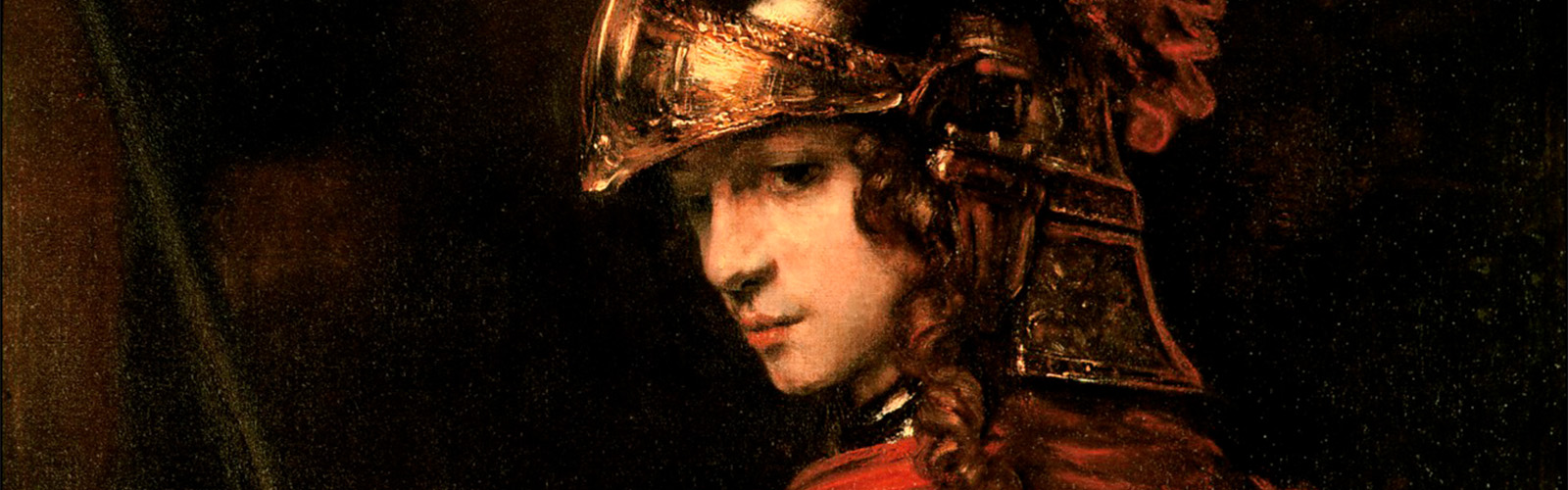
Athena
That’s why Athena is the most active personage in Homer’s Odyssey. Athena is the goddess who especially loves heroes. Odysseus is the best man, so Athena loves him especially and acts as his advocate and counselor. Things happen to Odysseus, and he meets those challenges, but Athena is the proactive character in Homer’s story. Her actions move the story forward and, at the close, she steps into the story one last time to tie up loose ends and set humanity up to continue in the gods’ absence. Athena shepherds Odysseus and his people into a new era of quieter, seemingly absent gods.
In Nolan’s film, Odysseus’ interactions with Athena are echos of his guilt and PTSD. He committed a moral war crime by using the Trojans’ worship of Athena against them and so he is haunted by “Athena,” who looks exactly like the priestess Odysseus’ soldiers slaughtered. She’s not any more real than any of the strange things Odysseus encounters.
However, removing an actual Athena from the tale creates a problem for Nolan.
It seems most important for Nolan that his film espouse one of the core values of Homer’s tale – a civic conscience. All these problems are happening in the world in Nolan’s film because people have stopped being good neighbors, practicing hospitality, and maintaining the social compact. Penelope and Telemachus’ seemingly foolish commitment to letting the suitors take advantage of their hospitality is proof of Penelope and Telemachus’ honor. The suitors’ willingness to take advantage of their hospitality is proof of the suitors’ dishonor. This is true in both Homer and Nolan’s tellings. And in both tales, Odysseus’ final vengeance on the suitors is an act of righteous justice.
Now, obeying the laws of the narrative, the suitors’ families will then enact their own violent judgement on Odysseus and his family, perpetuating a cycle of violence without end. Homer solves the riddle of endless cycles of violence by having Athena step in to make peace. He also has Odysseus make one last journey, deep inland, carrying an oar, until he meets someone who doesn’t know what an oar is and mistakes it for a winnowing fan for separating wheat from chaff. There Odysseus buries the oar and sacrifices to Poseidon, a final act of penance signifying his sea-going days are truly over. Homer’s protagonist must settle things with the gods.
Nolan can’t have Athena reveal herself and deus ex machina the end of the story. He has to create a scenario in which Telemachus can appear innocent in the eyes of his neighbors and stay and rule Ithaca once Odysseus leaves. So Nolan takes Telemachus out of the room while Odysseus “Jason Bournes” the uncouth rabble. And because our post-enchantment heroes have no need to pacify Poseidon, Odysseus and Penelope, totally over it, can sail off into an ambiguous sunset together, reminding me mostly of Woody and Bo Peep at the end of Toy Story 4. (There are lots of movies about retirement these days as Hollywood’s biggest audience segments, Baby Boomers and Gen X, enter their twilight years.)
I appreciate that Nolan was so true to his telling that, by the time he reaches the end of the story, he had to change it to make it work in accord with this overall vision. Is it a shade clumsy to take Telemachus upstairs so no one sees his act of violence in the final confrontation? Yes. Is Odysseus and Penelope’s sailing off into the sunset a bit more open ended that we might like in a blockbuster of this scope? Yes. Are both of these storytelling decisions unconvincing? Do they feel like a cheat? They do to me. They are the only parts of Nolan’s Odyssey that don’t feel like The Odyssey. A story doesn’t survive in tact for thousands of years without strong bones. Take out a wall as load-bearing as the actual existence of the gods and things are going to get a little shaky.
The Post-Religious Imagination
As I’ve been reading these oldest of stories over the past few years, one question I’ve been asking as I read is, What can the Modern mind glean from these tales? Beyond exoticism, where is the power here? But I also know that even the ancient people who first preserved these stories in the form we have them did so hundreds of years after the setting of the stories themselves. Odysseus already lived in an ancient time for the people who originally told this story. His interactions with the gods were exceptional even then. Many, but not all, of the story’s hearers believed in the gods, even if they didn’t ever interact with them like Odysseus did.
We have Homer’s stories mostly because the Romans loved them, and the Roman didn’t believe like the Greeks believed (and they didn’t believe like the Christians believed). I think they believed kind of like how a lot of people today believe. Their gods stood for ideals, and their religious rites were about instituting civic values like patriotism and economic order and the divine right of the emperor to rule. Rome’s biggest blockbuster, Virgil’s Aeneid, reboots Homer’s Iliad and Odyssey to be a story about the founding of Rome, establishing Caesar Augustus and Rome as the true heir to Athens and Alexander the Great. Basically they adapted The Odyssey like Michael Bay or Mel Gibson might do it, using religious iconography to prop up a contemporary vision of political and military exceptionalism. Nolan’s adaptation is not that, at least. It is resolutely post-enchantment. It is an Odyssey for people who do not believe in god and who do not believe that there is value in the structure religion gives to society.
But Nolan’s story also longs for something to ground a shared sense of civic responsibility. Nolan’s story looks at a culture (ours) in which belief in god is dead for many, perhaps justifiably given the ways people have abused others in the name of god in service of religious power structures. It looks at that god-less culture and says, well, we need something to encourage us to treat each other well, to “do to others what you’d have them do to you,” that Golden Rule both Jesus and Nolan’s Odysseus espouse. It may sound trite and annoyingly contemporary to our ears when we hear Odysseus say it, akin to his “our age of bronze is ending” line, but in one form or another the Golden Rule is common to all cultures. Absent all else, it’s maybe the most likely moral bedrock Nolan can grab onto to establish a universally-accepted moral order for his story.
After Interstellar and Dunkirk and Tenet and Oppenheimer and now The Odyssey, it’s clear Nolan fears the world is going to end and he’s looking for something to save it. He’s our most popular and successful filmmaker, I think, because we all agree with him. Maybe an old story told in a new way could be the nudge we need to recalibrate our lives? What saved the Greeks? What saved the Romans?
As I said, I find Nolan’s ending convenient and unconvincing. Maybe the only thing that can save us is the same thing that saves Homer’s narrative – Athena herself. Maybe we need God and nothing else will do.
God, I hope not. I hope we can continue to resist collective nuclear suicide (Oppenheimer). I hope we can push past greed and sloth to collaborate on climate change mitigation (Interstellar). I hope we can each risk the illusion of personal security in favor of the common good (Dunkirk). I hope we can be hopeful about the future and make decisions that will benefit our kids and our kids’ kids even if things feel hopeless now (Tenet). I hope we can respect each other’s differences, oust obviously selfish leaders, and maintain the social compact (The Odyssey). God, help us.
Coda: Rough Seas
I hung a hammock in the trees on the edge of the meadow. I wanted something to entice my kids down into the “wilder” parts of our property. It worked. In late afternoon as the sun is setting over the hill, we stomp down through the star thistle and barestem biscuitroot. The kids clamber into the hammock and we play a game they call “Rough Seas” where I rock the hammock boisterously while telling them a story. Last weekend I spun a tale about a princess and a warrior from neighboring Polynesian islands who cross the ocean in a canoe and opt to leap together into an angry volcano to appease a tempestuous god and save the princess’s people. Basically it was a Moana/Conan the Barbarian cross-over adventure.
My kids prefer stories where the heroes make friends with the antagonists rather than destroy them—to my delight—and if the tale starts going in a direction they don’t like, they’ll poke their heads up above the folds of the hammock to insist I do something differently. So I’ve learned to turn the wildcats that stalk them along the shores of the Amazon and the krakens that pull them into the deep and the aliens on the dark side of the moon into compatriots lest I receive in media res notes from a couple of toddlers that would make a studio executive blush.
As the princess and the warrior jumped into the volcano mere moments before it erupted, I had the shields the heroes were carrying become a kind of magical canoe that would allow them to ride the lava waves just as they had navigated an ocean storm earlier in the story. The kids didn’t like this. They stopped the swinging of the hammock to tell me that they should be saved by Maui. I wasn’t aware of this, but apparently, all the animals I had mentioned throughout the tale were actually Maui in disguise. He had been following the princess and the warrior on their journey to see if they were truly brave and honorable and selfless. When they jumped together into the volcano, he saw that they were truly good and swooped down in the form of a giant bird to to save them. The volcano was pacified by their earnest sacrifice. On the beach afterwards, the demigod lauded them in front of the princess’s people and promised to continue watching over everyone thereafter as the princess and the warrior continued their adventures as best friends. Good notes.
Maybe there’s something in us that wants God to save us. We’re all just children, after all, trying our best and looking to stories to bolster our belief in ourselves, in each other, in the persistence of goodness itself, and, if we believe in God, in God.
Vague magic is unconvincing. Nolan knows this – I think that’s why he works so hard to root his fantasies in reality. My kids know that – there was no set-up in the story for their shields to become a magical canoe. But for them, Maui had been there all along perched on the edge of their canoe like a pelican, buzzing around their heads like a dragonfly, and leaping in the ocean spray like a dolphin. I didn’t even know those animals were Maui. They did.
And they wanted Maui to confer approval on their adventure in the end – “Well done, good and faithful servants.” – because they were just doing their best, and kids know that even when they are trying to do good, they sometimes misstep and garner a bit of discipline from their parents. We need God to call it “good.” Otherwise it might not be.
Homer’s ending to The Odyssey isn’t a cop-out. It’s the only way the story can really end. (Sorry, Chris.) Just as Homer’s whole narrative is about fealty to a divine order in light of immense trials, so it must end with a final affirmation of dependence on the divine. Only Athena Promachos, protector of heroes, can decree Odysseus’ war complete. Only Athena Polias, founder of Athens, can sustain Ithaca’s polity. Only Athena Parthenos, pure expression of god’s mind, can make them wise. Only Athena Chalinitis, creator the olive tree, bridler of unruly horses, can bring peace. Maybe only the grey-eyed goddess can save us now.